
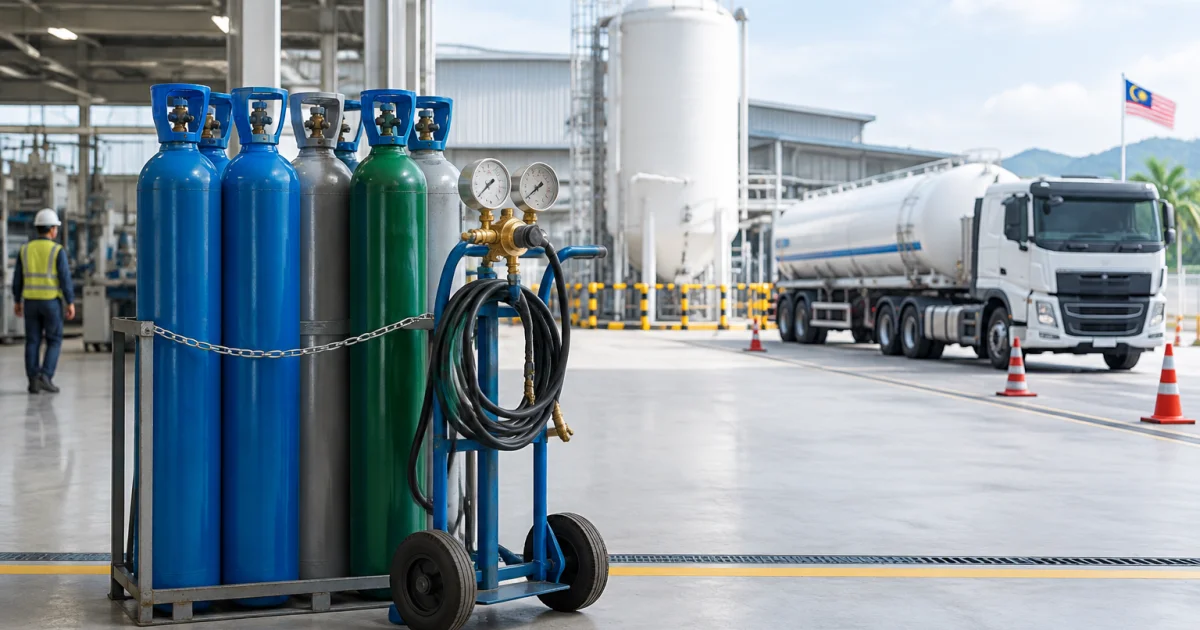
Why Malaysia Industrial Gases Pricing Varies: What Manufacturers Should Ask Before Ordering
Procurement teams often expect industrial gas to be priced like a commodity: pick a gas (oxygen, nitrogen, argon, CO2, acetylene), pick a cylinder size, compare three quotes, and order. In practice, Malaysia Industrial Gases pricing can vary noticeably even when the product name looks identical on paper.
This isn’t always about “cheap vs expensive” suppliers. More often, it’s about scope. One quote may include cylinder rental, delivery, and a regulator check; another may exclude everything except the gas fill. My opinion (based on how industrial purchasing tends to fail in real factories) is that buyers should treat gas quotations like a service + equipment + logistics bundle, not just a line item.
Below is a practical, manufacturer-focused checklist of what to ask before placing an order—so you can compare offers fairly, prevent production interruptions, and avoid the classic “the invoice doesn’t match the quote” surprise.
1) The gas isn’t always the same gas: grade, purity, and verification
Two cylinders labeled “nitrogen” may serve very different needs. For many plants, general-purpose supply is adequate. For others—labs, certain plastic and glove lines, electronics, or processes sensitive to oxidation—purity and consistency become the real cost driver.
Ask your supplier to specify the following in writing:
- Grade/purity target (e.g., industrial vs purified/specialty). Higher purity typically costs more because of additional processing and tighter handling controls.
- Moisture/contaminant considerations where relevant (especially for nitrogen and argon in shielding or inerting applications).
- Certificate of Analysis (COA) availability or batch verification when your QA requires it.
- Valve type and compatibility, because changing valve standards can force you to replace regulators or manifolds.
If your team is unsure what grade is needed, anchor the discussion to the application. For example, people searching “what is argon gas used for” are usually thinking about shielding in MIG/TIG welding, purging, or specialized manufacturing. Those uses can be sensitive to contamination—so the question isn’t only “How much is argon?” but “What level of argon quality keeps our weld reject rate stable?”
Opinion: If a supplier can’t clearly explain the grade you’re buying and how it matches your use case, any “good price” is a risk. A small price difference can be wiped out by rework, scrap, or process instability.
2) Volume and supply mode: cylinder, pallet, or cryogenic bulk
Pricing also moves with how much you consume and how you want it delivered. In Malaysia, many factories start with individual cylinders and later move into larger supply modes once usage becomes predictable.
Common supply modes include:
- Portable cylinders for flexible, low-to-medium consumption areas (maintenance bay, welding stations, R&D).
- Pallet or manifolded cylinder packs (often what buyers mean when they ask about a “nitrogen pallet”) to reduce changeovers and improve flow stability compared to single cylinders.
- Liquid nitrogen / cryogenic solutions (e.g., Dewar tanks or portable liquid containers) for higher consumption or specialized cooling/freezing needs.
What to ask before you compare quotes:
- What supply mode is the quote based on? Two quotes can’t be compared if one assumes single cylinders and the other assumes a pallet pack.
- What is the usable volume and delivery pressure? Flow/pressure affects whether you need multiple cylinders or can run with fewer changeovers.
- What changeover support is included? Some suppliers help with manifold setup, leak checks, or guidance on safe cylinder handling; others do not.
If you’re still on individual cylinders, it’s worth reading a practical overview of portable gas cylinders in Malaysia to align your team on handling, storage, and selection basics. Better handling reduces losses and extends regulator life—both affect total cost.
3) Logistics and delivery terms: the hidden cost driver
Industrial gases are deceptively logistical. The “same” CO2 supply may cost more because the supplier can deliver faster, deliver to a tighter time window, or support multiple drops across a site. Even within Northern Malaysia, route density and delivery frequency affect cost because transport and handling are non-trivial.
Ask these questions upfront:
- Is delivery included? If yes, clarify coverage area, minimum order quantities, and whether the price changes for urgent deliveries.
- What is the lead time? Don’t accept “can” statements; request a typical lead time and how exceptions are handled.
- What happens if we run short? Do they offer emergency top-ups, after-hours support, or alternatives (like switching to pallet packs temporarily)?
- Do you collect empties and manage rotation? Poor cylinder turnaround can cause shortages even when you’re “ordering enough.”
For food and beverage operations, CO2 is a classic example: the gas itself isn’t the only concern—consistent delivery and correct handling are. If you’re comparing quotations for beverage carbonation or food processing, ask specifically about CO2 supply continuity, cylinder return cycles, and the supplier’s approach to preventing mix-ups.
Opinion: The cheapest unit price is meaningless if your line stops. For gases used in daily operations (shielding gas, cutting, inerting), prioritize a supplier who treats delivery reliability as part of the product.
4) Rental, deposit, and cylinder ownership: what you really pay over time
A big reason prices “vary” is that different suppliers structure commercial terms differently. One supplier may show a low refill price but add recurring rental; another may bundle rental into a higher refill price. Either approach can be fine, but only if you compare total monthly cost.
Before placing an order, ask:
- Do we rent cylinders or buy them? If renting, what is the rental rate and billing cycle?
- Is there a deposit? How is it refunded, and what conditions reduce the refund (damage, missing caps, late returns)?
- What counts as “lost” or “unreturnable”? Clarify timelines, documentation, and replacement charges.
- Are hydrotest/inspection costs included? Cylinders require periodic compliance checks; understand whether your price includes this maintenance.
Also clarify whether you’re receiving a cylinder exchange program (swap empty for filled) or dedicated cylinders assigned to your site. Exchange programs are common and efficient, but QA-sensitive operations sometimes want tighter traceability. That preference can affect cost.
5) Application fit: welding, cutting, inerting, and the “total job” mindset
Another pricing gap appears when suppliers quote gas alone versus gas as part of an application solution. Welding and cutting are the easiest examples because they involve multiple consumables and equipment variables.
If you’re using acetylene gas for cutting or heating, or argon for TIG/MIG shielding, ask questions that tie the quote to performance:
- What regulator and flow range is suitable? Oversized or low-quality regulators can cause instability and waste.
- Do you support mixed gas solutions? Some fabrication jobs benefit from blends; the right mix can reduce spatter and rework.
- What safety guidance is included? Especially for oxygen and acetylene, safe handling is non-negotiable.
- Can you supply related consumables? If your supplier also supports torches, hoses, contact tips, and even basics like a cutting disc or cutting wheel, it reduces procurement friction and downtime.
This is where “acetylene gas Malaysia” searches come from: people aren’t only shopping for a refill, they’re trying to keep cutting and heating work running without interruptions. A supplier who understands usage rates, safe storage, and torch setup can prevent costly mistakes—like flashback risks or incorrect pressure settings.
When safety is part of the buying decision, align your team with internal HSEQ expectations. This related guide can help frame what “good practice” looks like: Industrial Gas Safety Standards in Malaysia: What Businesses Need to Know.
6) A practical pre-order checklist to compare quotations fairly
When you put the above pieces together, you can build a quote comparison that is actually apples-to-apples. Here is a compact checklist your purchasing and engineering teams can use before you issue a PO.
| What to confirm | Why it changes price | What to request in the quote |
|---|---|---|
| Gas grade/purity | Higher purity needs tighter controls and sometimes documentation | Grade, purity spec, COA availability (if needed) |
| Package & supply mode | Cylinder vs pallet pack vs liquid supply affects handling and logistics | Cylinder size/type, pallet pack option, expected delivery pressure |
| Delivery scope | Transport frequency, site access, urgent delivery capacity | Lead time, delivery charges, minimum order, emergency support |
| Cylinder terms | Rental, deposit, inspections and replacement conditions | Rental rate, deposit terms, hydrotest/inspection responsibility |
| Equipment compatibility | Valve/regulator mismatch causes additional purchases and downtime | Valve type, regulator recommendation, manifold/connector needs |
| Safety & documentation | Better compliance support may cost more but reduces incident risk | SDS availability, handling guidance, delivery handling practices |
Opinion: The best procurement outcome is not the lowest invoice line. It’s a stable, repeatable supply arrangement with predictable total cost and minimal operational surprises. If your internal users complain about “gas always finishing too fast” or “pressure drops mid-shift,” treat that as a purchasing signal: the supply mode and application setup may be wrong, not just the price.
Conclusion: buy the outcome, not the cylinder
Industrial gas pricing varies because industrial gas is more than a chemical—it’s a supply chain, a safety system, and often a process-critical utility. When you ask the right questions about grade, volume, delivery, cylinder terms, and application fit, you can compare quotations fairly and choose a supplier that keeps production running.
If you’re currently sourcing oxygen, nitrogen (n2 gas), argon, CO2, or acetylene for manufacturing operations in Malaysia, use the checklist above to tighten your specifications and reduce the chance of downtime. A clear scope leads to clearer pricing—and better long-term supplier relationships.
Frequently Asked Questions
What factors usually make industrial gas prices different between suppliers in Malaysia?
Prices often differ because the quote may include different gas grades/purity, different supply modes (single cylinders vs pallet packs vs liquid), different delivery coverage/lead times, and different cylinder commercial terms (rental, deposit, inspection, loss/damage rules). Comparing only the refill price can be misleading.
How do I know whether I should buy nitrogen in cylinders or a nitrogen pallet pack?
Start with consumption rate, changeover frequency, and required flow/pressure at the point of use. If you are changing cylinders too often, experiencing pressure drops, or managing multiple cylinders across shifts, a pallet pack/manifolded supply can reduce handling and improve stability. Ask the supplier to recommend a supply mode based on your hourly/daily usage and peak flow needs.
What is argon gas used for in manufacturing, and does that affect pricing?
Argon is commonly used as a shielding gas for TIG/MIG welding and for purging/inerting in certain processes. These applications can be sensitive to contamination and flow stability, so the required grade, supply mode, and regulator/valve compatibility can affect total cost. Cheaper argon may cost more overall if it increases weld defects or causes instability at the torch.
What should I ask when arranging CO2 supply for a factory or food operation?
Confirm the required grade for your application, your typical usage pattern, delivery lead time, and cylinder turnaround (collection and replacement). Ask what happens during peak demand or if you run short, and clarify delivery charges and minimum order quantities. Consistent supply planning matters as much as the per-cylinder price.
Why does acetylene gas pricing sometimes come with extra charges beyond the refill?
Acetylene supply can include cylinder rental/deposit structures, safety handling requirements, and equipment compatibility considerations (regulators, flashback arrestors, hoses). Some quotes also differ based on delivery terms and how empties are managed. Request a breakdown of rental/deposit, delivery, and any inspection or replacement conditions so the total monthly cost is clear.
Get a clearer, comparable gas quote from Wellgas SDN. BHD.
If you’re reviewing quotations for oxygen, nitrogen, argon, CO2, acetylene, mixed gases, or liquid nitrogen, Wellgas SDN. BHD. can help you scope the right grade, supply mode (cylinders or pallet-type solutions), and delivery plan for your operation in Penang and Northern Malaysia. Share your application and consumption pattern, and we’ll help you compare options that reduce changeovers and minimize supply disruptions.
Disclaimer
We hope you find this article helpful and informative. The content provided is for general informational purposes only and does not constitute professional advice or necessarily reflect the full range of services offered by Wellgas Sdn. Bhd.
For personalized guidance, please consult a professional or contact us directly. While we strive for accuracy and completeness, we cannot guarantee that the information is error-free. Wellgas Sdn. Bhd. assumes no responsibility for any errors or omissions.