
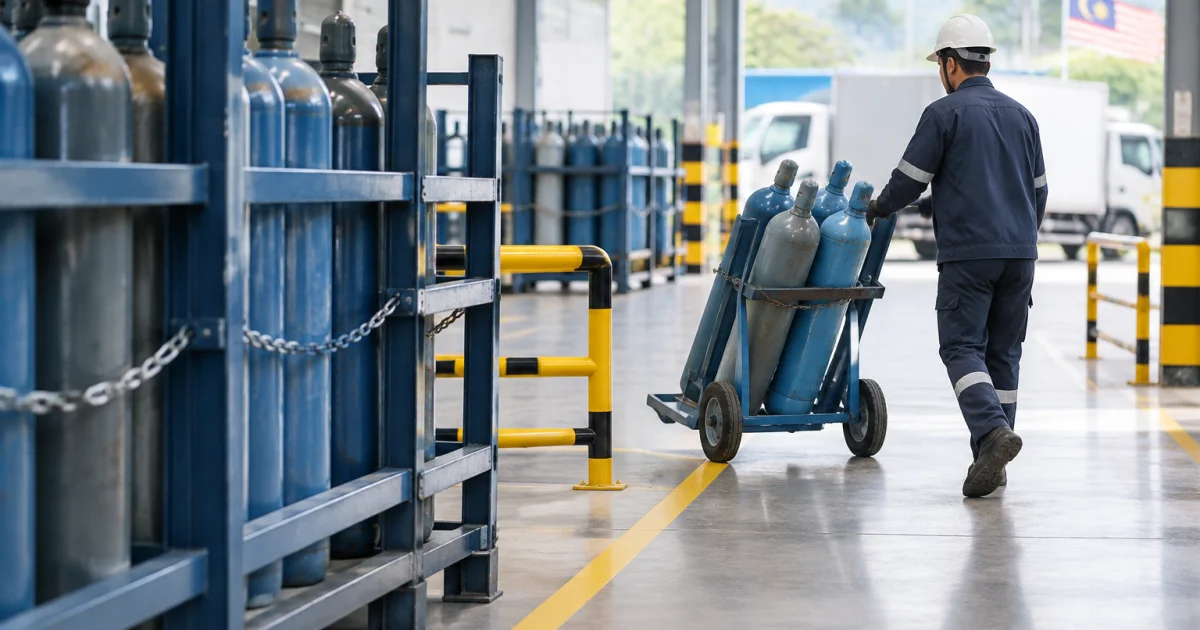
Portable Gas Cylinder Malaysia: Safety, Logistics, and True Cost on Busy Jobs
Portable cylinders are the quiet backbone of metal fabrication, automotive repair, and site-based work. When everything is going well, nobody thinks about them. When something goes wrong—an empty bottle mid-job, a damaged valve during transport, inconsistent weld quality, or a regulator that doesn’t match the gas—your “simple consumable” becomes the biggest schedule risk on the floor.
This article shares an opinionated, operations-first view of Portable Gas Cylinder Malaysia buying and management: not just “what gas is used for what,” but how safety, logistics, and total cost actually play out day to day. I’ll separate practical facts (what typically matters) from judgment calls (how I’d run it if I owned the downtime).
To keep this grounded, think of two common realities:
- Workshops that cycle multiple gases: oxygen/acetylene for cutting, argon for TIG, mixed gases for MIG, CO2 for certain welding setups, and occasional nitrogen for purging or testing.
- Job sites where a cylinder is a mobile asset: carried, loaded, unloaded, stored temporarily, and exposed to weather and handling by multiple crews.
The key idea: your cylinder program is an operations system. If you design it that way, you reduce incidents, prevent “work stoppage moments,” and often lower cost without chasing the cheapest refill.
1) Safety is an operations problem, not a poster
Fact: most cylinder incidents come from routine handling—transport, storage, connection/disconnection—rather than the gas “mysteriously failing.” So if you want fewer issues, focus less on slogans and more on repeatable steps and equipment condition.
Opinion: the simplest safety upgrade is standardization. When every cylinder looks “almost the same,” crews take shortcuts. When fittings, regulators, and storage rules are standardized and audited, shortcuts become harder to justify.
Handling and storage habits that actually reduce risk
- Secure cylinders every time (chain/strap on racks or trolleys). “Just leaning it for a minute” is how valves get hit.
- Protect the valve during moves. A damaged valve is not a small repair; it can turn into a serious hazard.
- Keep oxygen away from fuel gases in storage and staging areas. Segregation planning is easier than incident response.
- Keep caps, regulators, and hoses in good condition. Leaks and flashback risks often start with neglected accessories.
- Train for the handover: when a new crew takes a cylinder, they inherit risk. A simple “check before use” routine reduces surprises.
If your site uses oxy-fuel cutting, treat flashback arrestors and correct torch setup as non-negotiable. Cutting and heating can feel “basic,” which is exactly why complacency creeps in.
For a broader look at compliance-minded practices, it’s worth reading Wellgas’ overview of industrial gas safety standards in Malaysia and aligning your internal SOPs to something your supervisors can enforce consistently.
2) Logistics: your refill plan is part of production planning
Most workshops don’t run out of gas because they didn’t know how much they use. They run out because they didn’t translate usage into a reorder trigger and a delivery routine that fits their work pattern.
Opinion: your goal isn’t “never run out.” Your goal is “never run out at the worst time.” That means planning around high-consequence tasks: long TIG welds, critical path fabrication, shutdown maintenance windows, or on-site jobs where returning to base is expensive.
Build a simple cylinder control system
- Label a staging area: “full,” “in use,” “empty/return.” Confusion here creates accidental downtime.
- Assign ownership: one role (storekeeper, supervisor, lead welder) owns reorder decisions.
- Set a trigger: for example, when you have X cylinders left in “full,” a delivery is booked. The exact number depends on lead time and usage volatility.
- Bundle deliveries: coordinate gas refills with consumables (tips, nozzles, contact tips, regulators, hoses). One-stop procurement reduces admin cost and missed items.
For high-use operations, consider whether cylinders alone are the best logistics answer. Some facilities benefit from palletized supply approaches (for example, a nitrogen pallet configuration for higher, steadier demand) because it reduces handling frequency and stabilizes availability. That said, it changes your footprint, access control, and delivery coordination—so it’s not automatically “better,” just operationally different.
3) Gas choice: don’t let “what it’s used for” end the discussion
People often search questions like “what is argon gas used for” and stop at a one-line answer. That’s not enough for an operations decision. Gas selection is tied to weld quality, rework rate, consumable burn, cycle time, and training burden.
Fact: argon is widely used as a shielding gas, especially for TIG welding and as part of mixed shielding gases for MIG on certain materials and processes. Oxygen and acetylene are common for oxy-fuel cutting/heating tasks. Nitrogen (N2 gas) shows up in purging, pressure testing, and certain industrial processes where an inert environment is helpful.
Opinion: you should choose gases based on the whole workflow, not just the torch. If a cheaper gas blend increases spatter, cleanup time, or rework, it may cost more than a “better” blend over a month of production.
Practical decision cues for workshops and job sites
- If quality variability hurts you (customer rejection, strict WPS adherence), prioritize gas consistency and supplier support over the lowest refill price.
- If mobility is the constraint (many small site jobs), prioritize cylinder size mix, transport method, and availability of swaps.
- If cutting is the bottleneck, focus on the whole cutting setup: gas supply reliability, torch condition, correct regulators, and consumables (including cutting discs/wheels when applicable).
Some operations benefit from keeping a “standard set” of gases for common work and limiting special cases. Fewer gas types can reduce wrong hookups and training complexity. The tradeoff is flexibility—so it depends how diverse your job mix is.
4) Total cost: the hidden money is usually downtime and mishandling
It’s tempting to compare cylinder options purely on “refill price.” But for most workshops, the refill price is only one part of the monthly bill. The larger costs are usually the ones nobody invoices you for: delays, remobilization, and errors.
Here’s a simple, operations-minded total cost checklist. Use it to compare supply approaches (more cylinders vs. larger cylinders, more frequent deliveries vs. holding buffer stock, or adding a palletized supply method where appropriate).
Total cost checklist (practical explanation)
| Cost driver | What to watch | Why it matters |
|---|---|---|
| Downtime risk | How often you hit “empty mid-job” | Minutes lost multiply across welders and jobs |
| Handling time | Trips to store, changeovers, searching for “full” | Hidden labor cost and distraction |
| Damage and loss | Valve damage, regulator drops, missing caps | Safety risk + replacement cost + delays |
| Quality and rework | Porosity, spatter cleanup, inconsistent shielding | Rework is often more expensive than gas |
| Logistics/admin | Purchase orders, urgent calls, partial deliveries | Procurement overhead adds up fast |
| Compliance burden | Storage controls, segregation, training | Poor controls increase incident probability |
Opinion: if you want a quick win, attack the two biggest cost multipliers first: (1) prevent unplanned empty cylinders, and (2) reduce mishandling damage. These improvements typically pay back faster than negotiating a few percent off refills.
5) Equipment and consumables: stop treating them as separate purchases
Portable cylinders don’t operate alone. Your results depend on the full chain: regulator, hoses, torch, flashback protection (where applicable), and even adjacent consumables like grinding and cutting discs.
Fact: incorrect or worn accessories can cause leaks, unstable gas flow, poor cut/weld quality, and safety hazards. On job sites, equipment wear is often faster due to transport vibration, dust, and shared usage.
Opinion: procurement should bundle gas supply decisions with accessory standardization. When you buy “whatever is available,” you create a mixed ecosystem of fittings and performance that is harder to manage and easier to misuse.
What to standardize (and why)
- Regulators by gas type: reduce wrong connections and flow inconsistency.
- Torches and cutting equipment: consistent spares and training, simpler maintenance.
- Workshop consumables: keep predictable stock of items that commonly halt work (tips, liners, contact tips, twin hoses).
If your teams frequently alternate between torch cutting and abrasive cutting, stock planning should include both gas and disc inventory. For workshops that want to consolidate purchasing, see categories like welding and cutting equipment and grinding and cutting disc options so gas availability and cutting readiness are managed together rather than as separate emergencies.
And if oxy-fuel work is common, aligning on a consistent torch platform helps. A single, supported source for welding cutting torch components can reduce the “this one almost fits” problem that shows up on site at the worst time.
Conclusion: treat portable cylinders like a managed fleet
Portable cylinders are not just a refill item—they are a fleet of critical assets moving through your workshop and job sites. My view is that the best-performing teams in Malaysia treat gas supply like they treat tooling: controlled, standardized, and planned around production risk.
Start with what you can enforce: secure storage and transport, clear staging for full/empty, and a reorder trigger that prevents mid-job surprises. Then optimize for total cost by reducing handling waste and rework, not by chasing the cheapest refill in isolation. Finally, align your gases with standardized regulators, torches, and consumables so performance and safety don’t depend on who happens to be working that day.
If you want a more basic primer alongside this operations view, you can also compare it with Wellgas’ overview of portable gas cylinders in Malaysia uses, benefits, and safety tips—then bring the two together into a single SOP your team actually follows.
Frequently Asked Questions
What is argon gas used for in welding workshops?
Argon is commonly used as a shielding gas, especially for TIG welding, and it’s also used in shielding gas mixes for certain MIG applications. In day-to-day operations, the benefit is a more stable arc and cleaner welds when the process, settings, and joint prep are correct.
When should a workshop choose acetylene gas instead of other fuel gases?
Acetylene is widely used for oxy-fuel cutting and heating because it supports high flame temperatures and responsive heat control. The practical decision is usually based on the type of cutting/heating work you do, the equipment you already standardize on, and how you manage safe storage, handling, and flashback protection.
How can I reduce downtime from running out of cylinders on a job site?
Use a simple control system: separate “full / in use / empty-return” staging, assign one person to own reordering, and set a reorder trigger based on how many full cylinders remain and your supplier lead time. For site work, also plan transport capacity and keep a buffer for critical-path tasks.
Is N2 gas only for factories, or do contractors use it too?
Nitrogen (often referred to as N2 gas) is used in many settings. Contractors may use it for purging, pressure testing, or creating an inert environment for certain tasks. The key is matching cylinder size, purity needs, and delivery frequency to the job pattern.
What’s the most overlooked cost in portable cylinder programs?
Downtime and mishandling are often the biggest hidden costs. A mid-job empty cylinder, a damaged valve during transport, or inconsistent shielding gas flow can create delays and rework that cost far more than the difference between two refill prices.
Make your portable cylinder program easier to run
If your workshop or job site is juggling multiple gases, cylinders, and welding/cutting accessories, Wellgas SDN. BHD. can help you simplify supply and reduce operational surprises. As a one-stop supplier for industrial gases, mixed gas solutions, cylinders, welding and cutting equipment, consumables, and safety products, we support practical setups that are safer and easier to manage day to day.
Share your typical jobs, gas types, and delivery needs, and we’ll recommend an operations-friendly supply approach that fits your workflow in Penang and Northern Malaysia.
Disclaimer
We hope you find this article helpful and informative. The content provided is for general informational purposes only and does not constitute professional advice or necessarily reflect the full range of services offered by Wellgas Sdn. Bhd.
For personalized guidance, please consult a professional or contact us directly. While we strive for accuracy and completeness, we cannot guarantee that the information is error-free. Wellgas Sdn. Bhd. assumes no responsibility for any errors or omissions.